
Heat control without the shiny look
Ceramic film is known for strong heat rejection while staying color-stable and refined. You get a sleek finish that fits everything from family SUVs to sport sedans.
Serving San Diego, California & surrounding areas
Mon–Fri 8am–6pm · Sat 9am–2pm
Ceramic Window Tinting · San Diego
Keep your cabin cooler, cut glare on I-5 and the 163, and protect your interior from UV with a clean, professional install that looks right from every angle.
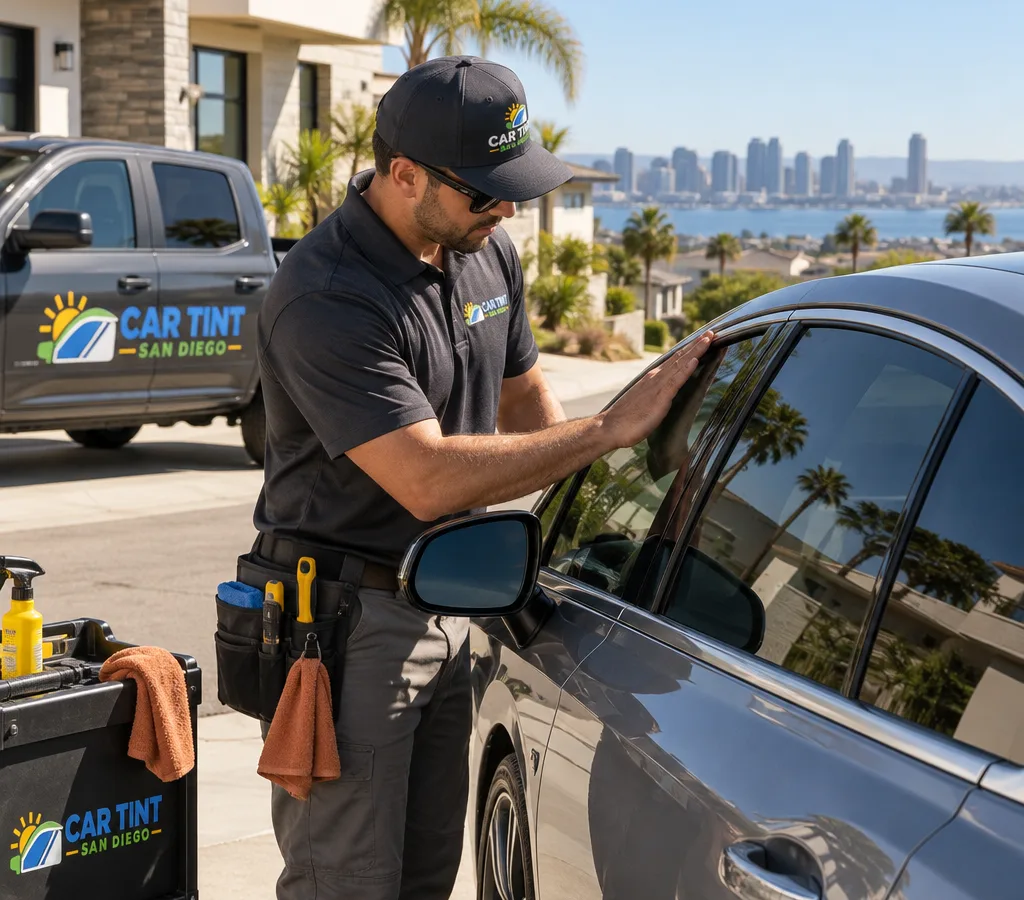
Everyday Comfort
If you are shopping for ceramic tint San Diego drivers can rely on day after day, start with what actually matters: heat rejection you can feel, clear optics at night, and an install that does not bubble, haze, or peel. Ceramic films are built with non-metal, non-dyed technology, so you get strong performance without the radio or GPS interference that can show up with some metallic films.
San Diego's sun, beach glare, and stop-and-go traffic make tint a practical upgrade, not just a style choice. Ceramic tint helps keep your cabin more comfortable when the car sits outside, reduces eye fatigue on long commutes, and blocks UV that can fade dashboards and upholstery.
Our shop, car tint san diego, installs ceramic window tinting for daily drivers, commuters, rideshare vehicles, and weekend cars across the city, and San Diego's trusted car window tinting team focuses on clean edges, consistent shade, and film choices that match how you drive and where you park.
Ceramic Film Benefits
Ceramic film is known for strong heat rejection while staying color-stable and refined. You get a sleek finish that fits everything from family SUVs to sport sedans.
A quality ceramic film keeps optics crisp, which matters when you are driving in mixed light, coastal haze, or after dark on unfamiliar streets.
Tint is a front-line defense against UV exposure through glass, and it helps slow interior fading and cracking on dashboards, door panels, and trim.
Glare off windshields, wet roads, and low-angle sun can be exhausting. Ceramic tint reduces harsh brightness so your eyes do less work.
Because ceramic films are non-metalized, they are a strong choice if you want performance without compromising electronics and in-car connectivity.
Installation Standards
A ceramic window tint install is only as good as the prep and the fit. We start by confirming the glass you want tinted and how you use the vehicle. Drivers who park outside in neighborhoods like North Park often prioritize heat control, while commuters running bright morning and afternoon routes through Mission Valley may care most about glare.
Next comes the part that separates a clean job from a frustrating one: surface preparation. The inside of the glass is carefully cleaned to remove oils, dust, and any residue that can cause contamination. We then shape the film to the glass, apply it with a controlled slip solution, and squeegee it down so it lays flat with consistent edges.
You will also get straight answers on what to expect after install. Fresh tint can look slightly hazy as moisture cures. We explain curing time, how to handle the windows right after the install, and what to do if you ever notice a lifting edge or trapped debris so it can be evaluated promptly.
If you are also thinking about changing the look or privacy level on an SUV or work truck, our car window tinting service covers film options and use-cases beyond ceramic-only builds.
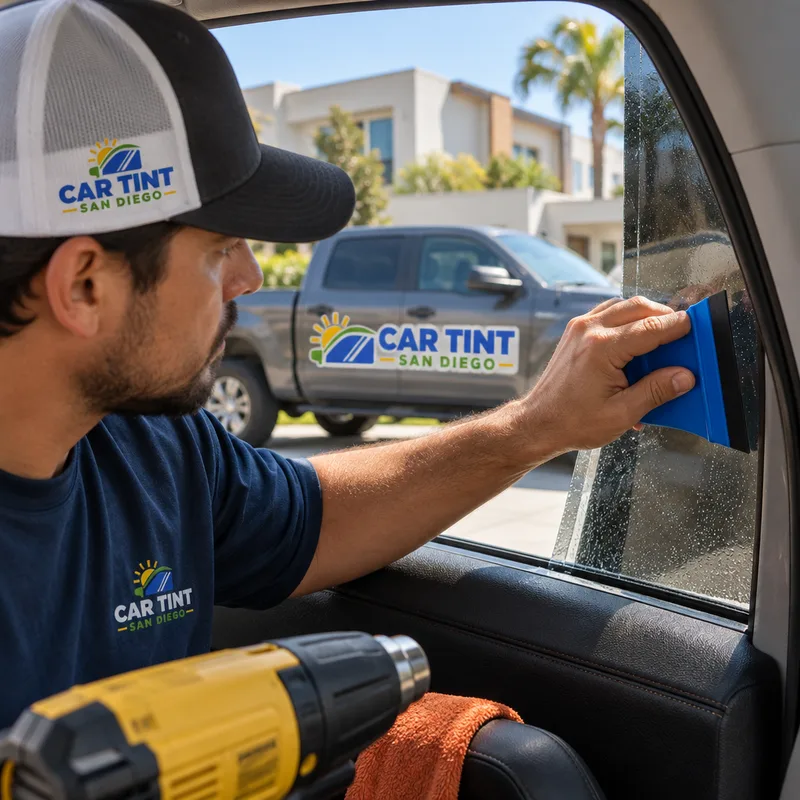
Installation Process
We confirm which windows you want tinted, discuss visibility preferences, and choose a ceramic film shade that fits your driving and parking habits.
We cover door panels and trim where needed and keep the workspace controlled to minimize dust and lint near the glass.
We clean the inside of each window thoroughly because most tint issues start with contamination that gets trapped under the film.
We cut and heat-shape film to match the glass, apply it evenly, and set edges carefully for a consistent finish.
We check for edge uniformity and any visible debris, then review curing expectations and window-care do's and don'ts for the next several days.
Straightforward Pricing
Ceramic window tinting in San Diego typically ranges from about $300 to $900+ for most cars, depending on the vehicle size, the number of windows, and the ceramic film grade. A standard sedan is usually less than a large SUV with extra glass, and adding a windshield strip or tinting additional glass increases the total.
Your final price depends on film type, shade choice, vehicle complexity (tight seals, dot-matrix areas, curved rear glass), and any old tint removal. The exact cost is confirmed after a quick look at the vehicle and the glass you want tinted.
Finished Results
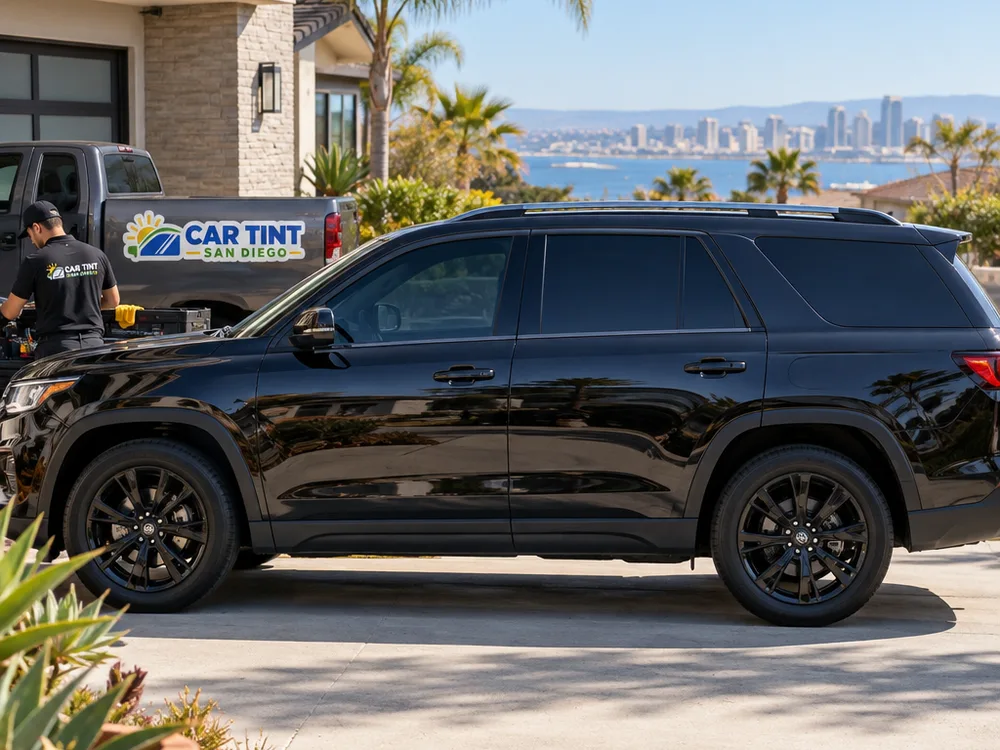
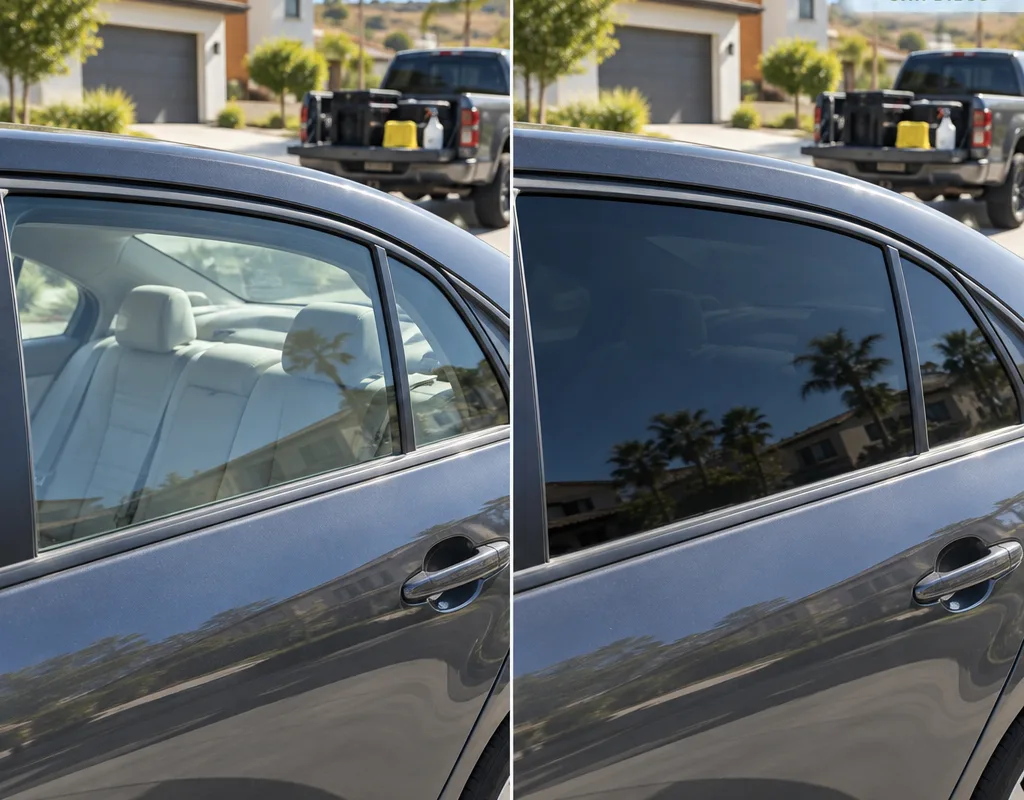
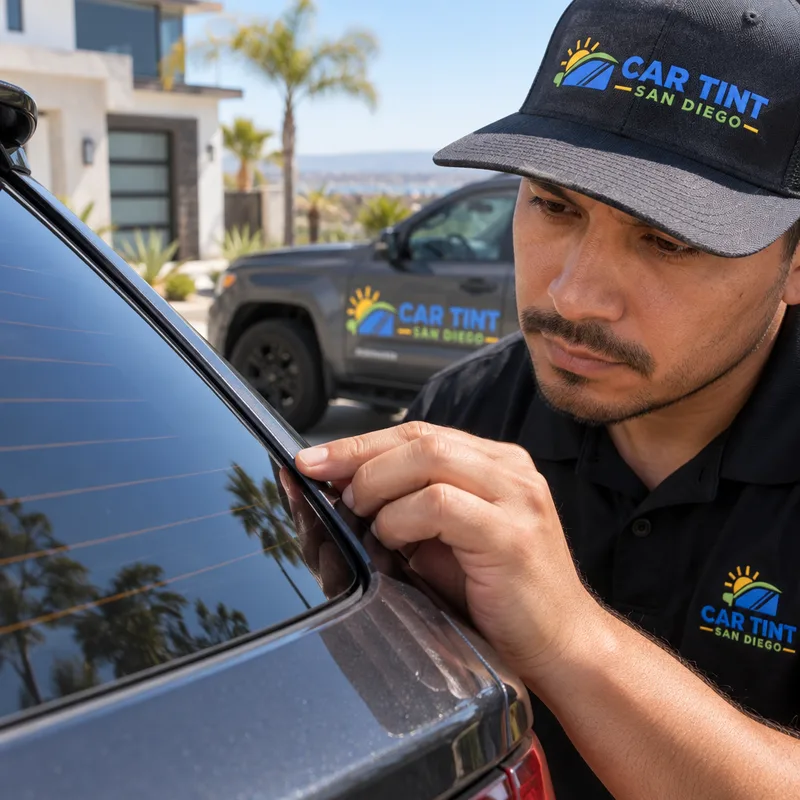
Customer Experience
“I went ceramic because my car sits outside all day, and the difference in heat is real. The tint looks even on every window and there are no distracting edges.”
“Night visibility was my biggest worry. The film is clean and clear, and the install looks factory. They walked me through curing and what to do the first week.”
“I had old film removed and replaced with ceramic. No mess, no leftover adhesive, and the rear window came out smooth with no bubbles.”
Common Questions
Most ceramic tint installations take a few hours, with time varying by vehicle size, window count, and rear glass complexity. If old film has to be removed first, plan for additional time because adhesive cleanup is detail-heavy and affects the finish.
Curing typically takes several days, and it can take longer if marine-layer humidity is high or the car is kept in shade. During curing, you may see a light haze or small water pockets; they usually resolve as moisture evaporates through the film.
Yes, old tint can be removed before installing ceramic film, and the removal quality matters as much as the new install. If any adhesive or contamination remains, it can show through the new tint, so we treat removal and cleaning as part of the finished result.
Ceramic tint is non-metalized, so it is chosen specifically to avoid the signal interference issues sometimes associated with metallic films. If you have any existing reception problems, we can talk through what you are seeing before film selection.
Keep windows up during the initial curing period and avoid cleaning the inside of the glass until the film has had time to set. If you need to clean later, use a tint-safe cleaner and a soft microfiber to avoid scratching the film surface.
Windshield options depend on what you want to achieve and what is appropriate for your vehicle and driving needs, since visibility and safety come first. Many drivers choose a sun strip at the top for glare control, and some consider clear heat-rejecting film where it makes sense.
Plan Your Installation
Tell us your year, make, model, and which windows you want tinted. We will recommend ceramic film options, confirm what to expect on install day, and provide a clear written estimate.