
Confirm the windows included
A quote should spell out whether it includes the rear windshield, quarter windows, and any small cargo glass. “Full car” means different things to different shops.
Serving San Diego, California & surrounding areas
Mon–Fri 8am–6pm · Sat 9am–2pm
Window Tinting Prices · San Diego
Get clear, written pricing for your exact vehicle and film choice, with options that fit San Diego heat, glare, and daily driving.
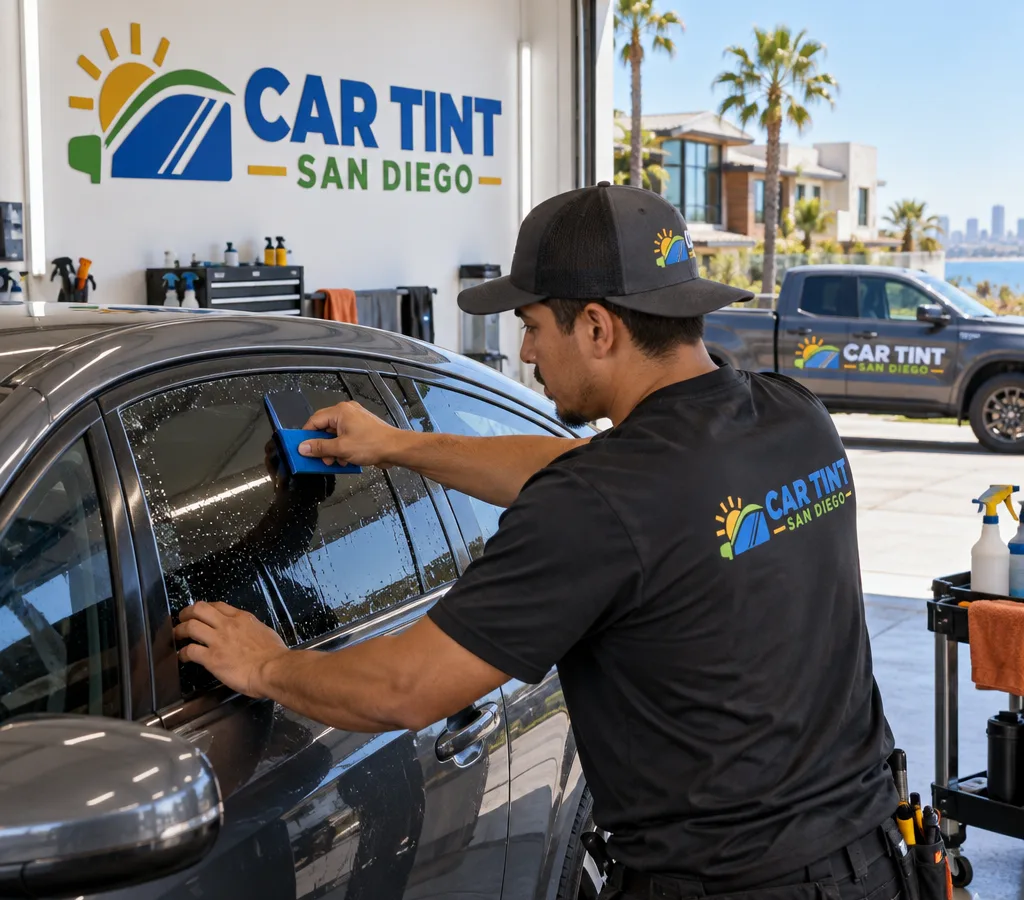
Clear Quote Comparisons
If you are comparing window tinting cost San Diego quotes online, the biggest difference is usually not the shop name. It is the film type, how many windows are being tinted, and whether you are pricing a clean, warrantied install or a quick cut-and-stick.
At car tint san diego, our quotes start with your vehicle—sedan, coupe, SUV, truck, Tesla, or another model—your goals such as heat rejection, privacy, glare reduction, and UV protection, and your preferred film category. We will walk you through what changes price and what does not, so you can compare window tinting San Diego prices on equal terms. Our team are car window tinting specialists serving San Diego, CA, and we price work the way we install it: by the scope on the glass and the film you choose.
A fair estimate should specify the film line—dyed, carbon, or ceramic—the windows included, the shade range you are considering, and whether tricky rear glass with tight defroster lines or steep curves is included. If a quote is missing those details, it is hard to compare it to other car window tinting San Diego prices.
Straightforward Pricing
Most car window tinting in San Diego typically ranges from about $180 to $650+, depending on vehicle size and film type. A basic dyed film on a small sedan is often at the lower end, carbon films tend to land mid-range, and premium ceramic tint on larger SUVs and vehicles with complex rear glass commonly prices at the upper end.
Your final window tinting prices in San Diego change with the number of windows, film performance level, rear windshield difficulty, removal of old tint, and whether you are tinting the front doors only or doing a full vehicle. Exact pricing is confirmed after a quick vehicle check so the quote matches the glass you actually have.
Pricing Variables
Film type is the fastest way to explain why two quotes can be far apart.
Dyed film is usually the entry-level option. It can look great and reduce glare, but it is not the same choice as a higher-performance film if your priority is cabin heat reduction.
Carbon film generally costs more than dyed. Many drivers choose it for a darker, more stable look and better heat performance without jumping to the top tier.
Ceramic film is typically the highest-priced category because it is built for strong heat rejection while keeping clearer visibility, especially helpful in bright sun and stop-and-go traffic.
Vehicle size and glass shape matter too. Larger SUVs, wagons, and trucks have more glass area. Some rear windshields need more time due to steep curves and defroster lines, and that labor shows up in the quote.
Finally, removal of old tint can be its own line item. If the old film is bubbling or turning purple, proper removal and adhesive cleanup takes time, and pricing should reflect that.
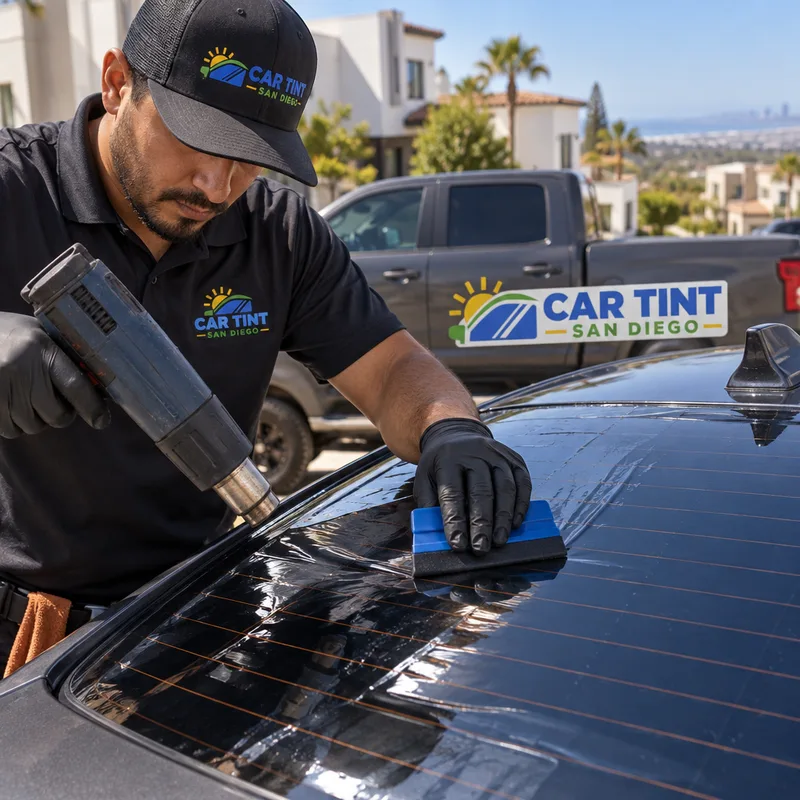
Compare Equal Scope
A quote should spell out whether it includes the rear windshield, quarter windows, and any small cargo glass. “Full car” means different things to different shops.
Pricing makes sense only when the film category is named—dyed, carbon, or ceramic—and you know what performance you are paying for.
The darkest shade is not always the best driving experience at night. A good quote discussion includes shade options, not a single default.
Rear windshields often determine install time. If the quote ignores rear glass complexity, it may be under-scoped.
Removal can be quick or time-consuming depending on film age and adhesive. It should be priced as its own step when needed.
Quote to Finished Glass
We confirm your exact model and window count, check for existing film, and look at the rear glass shape so pricing is accurate.
We price options by film category and shade so you can pick a package that fits your goals, not a one-price-fits-all bundle.
You get a clear scope of what glass is included and any add-ons like old tint removal, so comparisons to other quotes are fair.
We prep the glass, install and squeegee the film, and finish edges cleanly. Rear glass work is handled with proper shrinking and alignment.
We inspect for debris and edges, then explain curing time and how to clean safely during the first days after install.
Finished Tint Examples
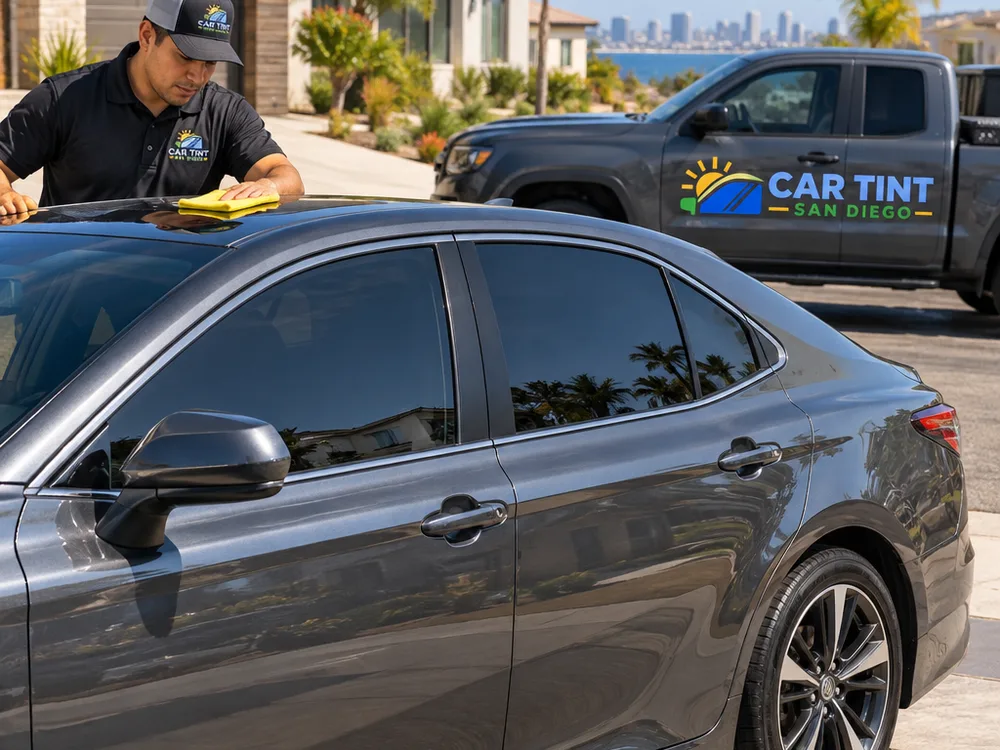
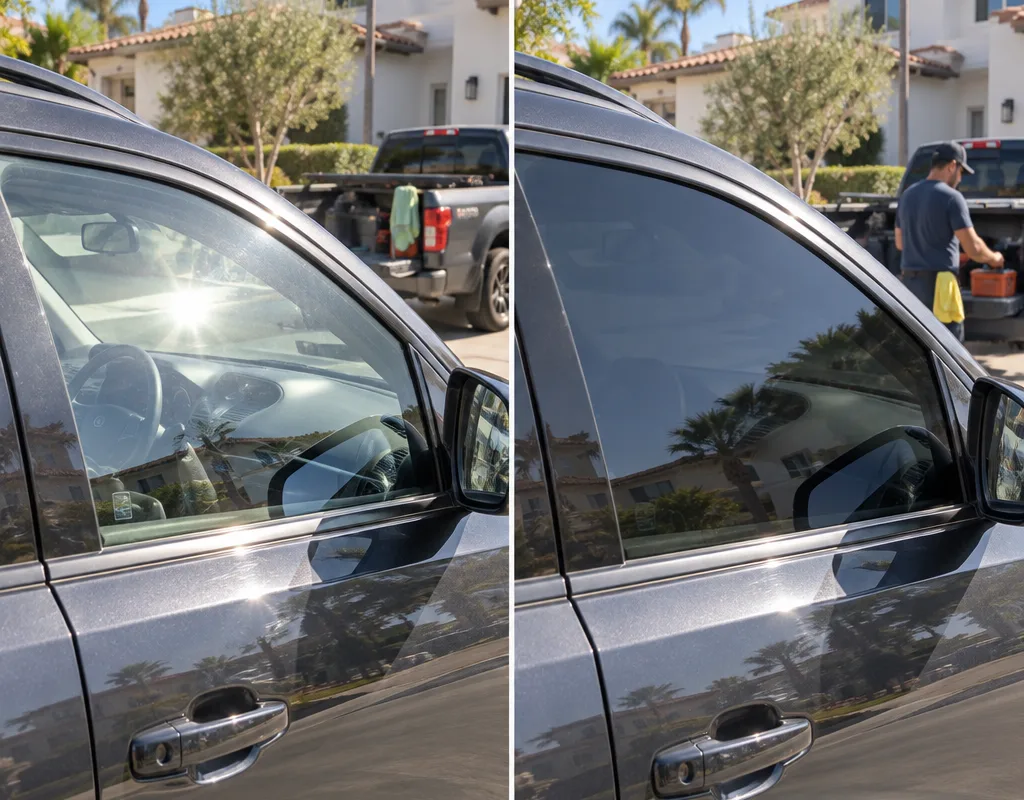
Customer Proof
“I commute across San Diego every day and wanted heat reduction more than darkness. The ceramic option cost more, but they broke down why and I could feel the difference right away.”
“I got pricing by film type and it was easy to compare. The final quote matched what I paid, and the rear glass came out clean with no bubbles.”
“I had old tint that was peeling on the back window. They explained the removal cost up front and the new film looks uniform instead of patchy.”
Common Questions
Most price gaps come from film type (dyed vs. carbon vs. ceramic), whether the rear windshield is included, and how the shop handles old tint removal. Two quotes can look similar until you confirm the exact windows covered and the film line being installed.
Ceramic tint usually costs more, and people choose it when heat rejection and clear visibility matter more than getting the lowest price. In San Diego driving, that can be a practical upgrade because sun exposure is consistent year-round, and cabin heat builds fast in traffic.
SUVs and trucks typically cost more because they have more glass area and sometimes more complex rear cargo windows. The most accurate way to price it is by confirming your window count and whether you want every piece of cargo glass tinted or just the main side windows.
It depends on the package you choose, and the written quote should state it clearly. Rear windshields can be the most time-intensive piece because of curvature and defroster lines, so it is important to confirm whether it is included before you compare quotes.
Old tint removal is usually priced separately because the time can vary a lot based on film age and adhesive condition. We check the glass first, then quote removal so you are not surprised when peeling or bubbling film takes extra labor to clean properly.
Most appointments are completed the same day, but the exact time depends on vehicle size, the number of windows, and whether removal is needed. A full-vehicle tint on a larger SUV generally takes longer than front-door-only tint on a sedan.
Plan on keeping windows up for a few days so the film can cure and edges can set cleanly. Your installer will give a specific timeline based on the film and weather conditions on the day of install.
Quality film and proper installation should not prevent a rear defroster from working, but the rear glass needs careful handling because defroster lines can be damaged by aggressive scraping. That is one reason old tint removal and rear glass installation should be done with the right tools and technique.
Price Your Tint
Tell us your year, make, model, and which windows you want tinted. We will price film options in writing so you can choose the best value for your budget and driving needs in San Diego.