
Full front
Typically covers the bumper, full hood, full fenders, headlights, and mirror caps. This is the go-to for chip protection on San Diego freeway driving.
Serving San Diego, California & surrounding areas
Mon–Fri 8am–6pm · Sat 9am–2pm
Paint Protection Film · San Diego
Protect your paint from rock chips, freeway rash, and daily wear with a clean, high-precision install and a finish that looks factory, up close and in direct sun.
Precision Paint Protection
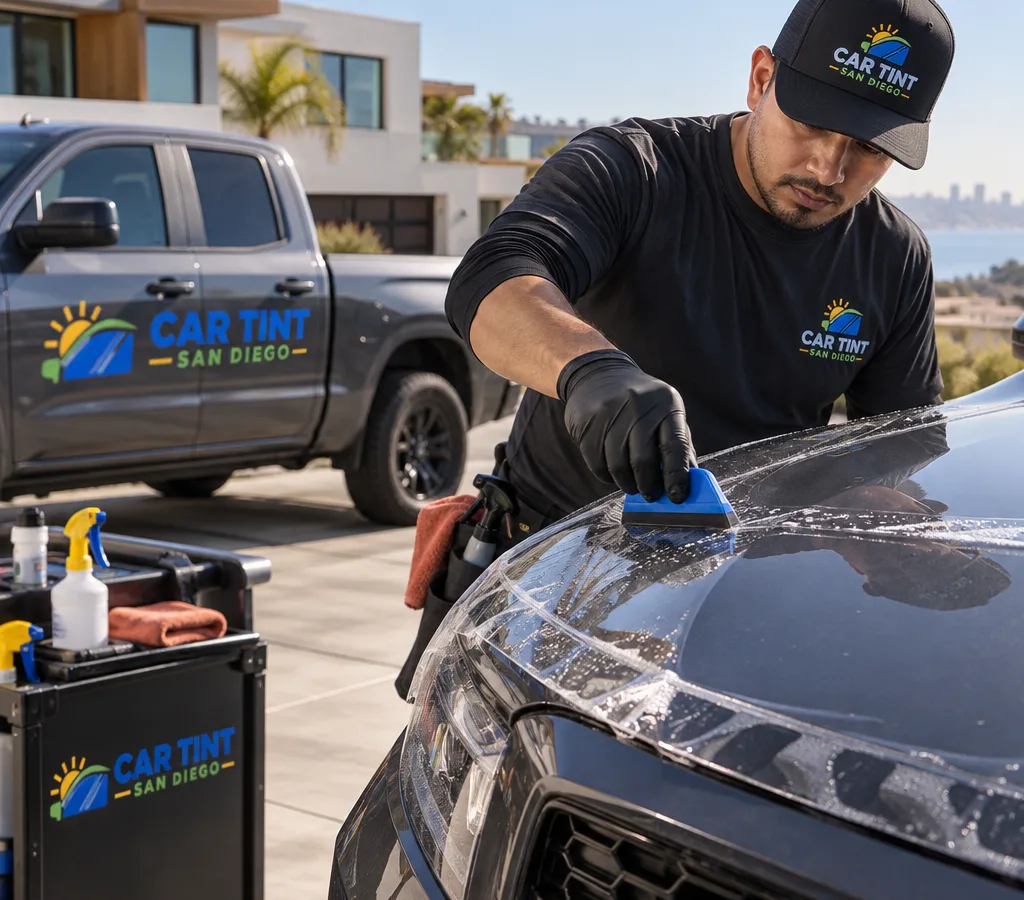
If you are searching for ppf san diego, you are probably trying to stop the same problems we see every week on local cars: rock chips on the freeway, scuffs from tight parking, and fine scratches that show up under bright coastal sun. Paint protection film (PPF) is built for that. It is a clear urethane layer applied over your factory paint to take the hit first, so your paint does not have to.
At car tint san diego, our PPF work is done like a finish-first trade. That means careful wash and decon, paint inspection under proper lighting, pattern fitment with attention to edges, and a controlled installation environment. We do not rush the parts that affect how the film looks a month from now.
Our team is known as car window tinting specialists serving San Diego, and many of the same customers who want a clean tint job also want PPF installed with the same mindset: straight lines, consistent coverage, and an end result that does not look like an add-on.
Installation Standards
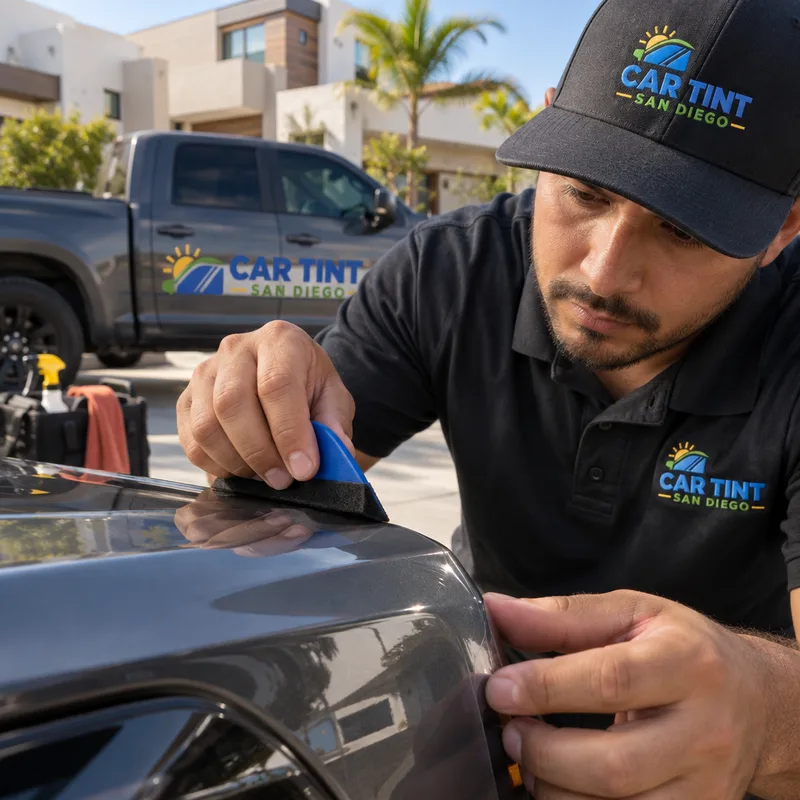
Most complaints about PPF come down to the basics being skipped: rushed prep, contamination under the film, or edges that lift because they were not wrapped or set correctly. A premium install is less about marketing terms and more about repeatable steps.
Install details we prioritize:
This is the difference between “covered” and “protected and clean.”
Coverage Planning
Typically covers the bumper, full hood, full fenders, headlights, and mirror caps. This is the go-to for chip protection on San Diego freeway driving.
Targets the most exposed surfaces, often the bumper and partial hood and fenders, plus mirrors. A practical choice when you want protection where damage starts first.
Extra coverage on areas that take abuse at speed, like rocker panels, lower doors, and rear impact zones behind the front wheels.
Maximum coverage for drivers who want long-term paint preservation across all painted panels. Coverage planning matters around edges, trim, and complex curves.
PPF can maintain the original gloss look, and some films can shift the appearance to a satin finish for a different style while still protecting the paint.
Installation Process
We look over the paint and discuss how you drive and park. That decides the right package and where seams need to land for the cleanest look.
We remove bonded contaminants so the film can sit flat. If the paint needs correction, we will explain what is worth polishing before the film goes on.
Panels are fitted and aligned with attention to symmetry and edge placement. We minimize visible edges where the panel design allows.
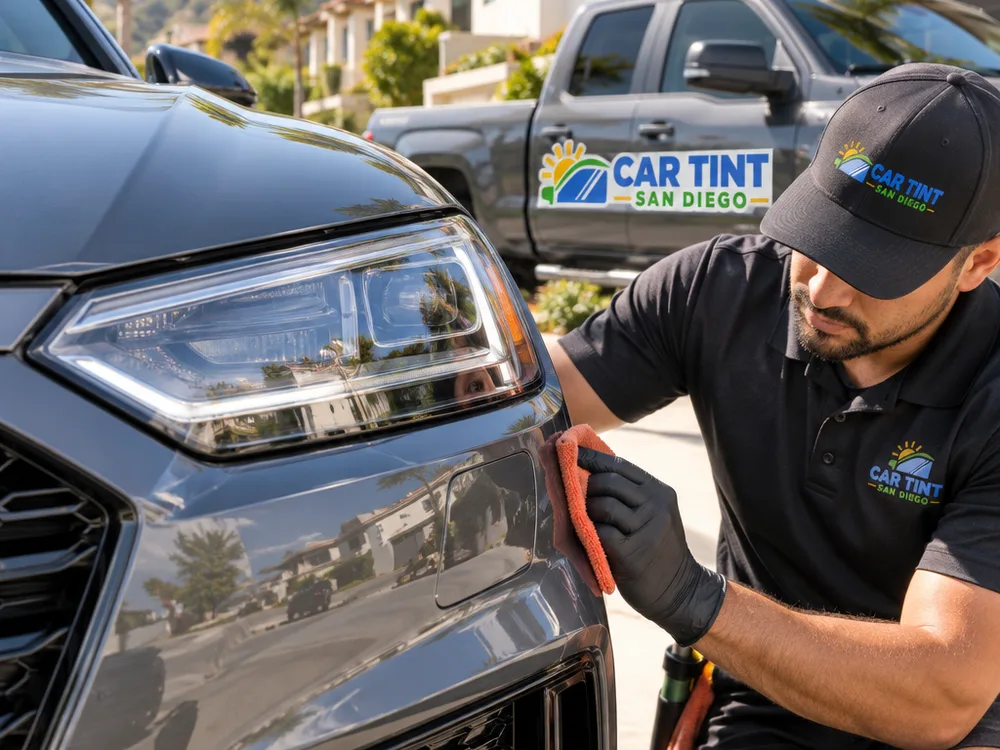
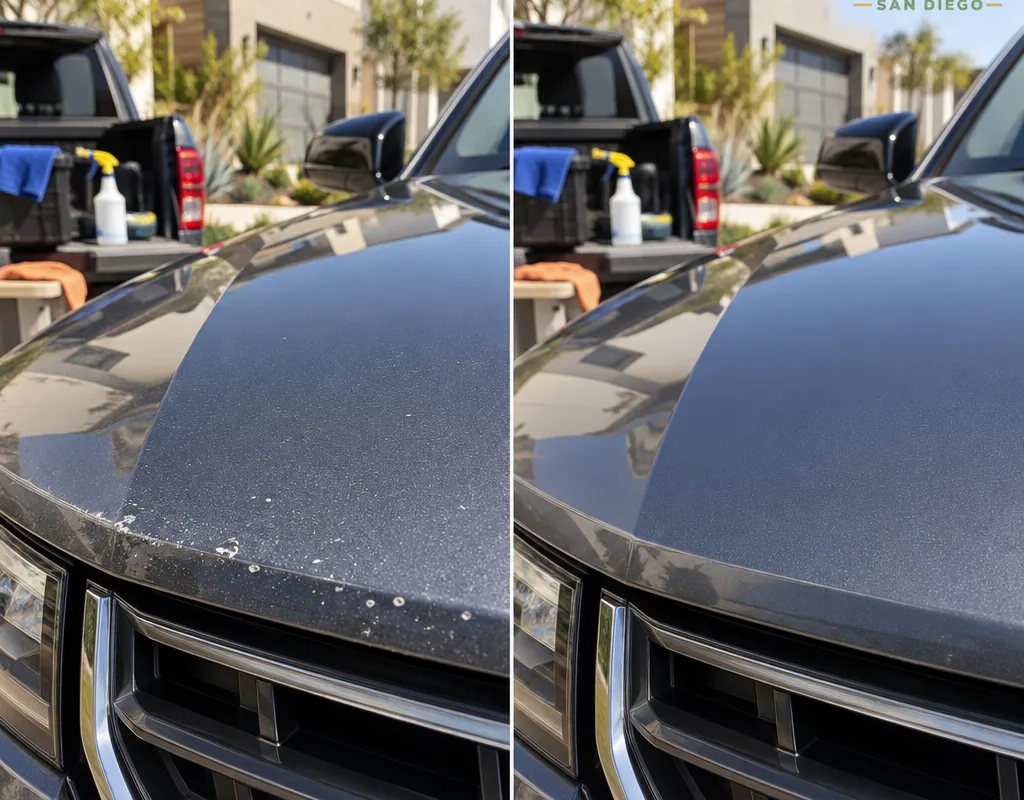
Corners and edges get extra attention for long-term hold. We do a final visual inspection under lighting that shows haze, fingers, or trapped debris.
You will get clear care instructions for curing time, washing, and what normal moisture patterns look like as the film settles.
Straightforward Pricing
PPF in San Diego typically ranges from about $800 to $2,500 for partial coverage or a full-front package, while a full vehicle wrap often runs $5,000 to $8,500+ depending on the vehicle and film choice. Larger SUVs and complex body lines take more film and more install time.
Your final price depends on coverage area, film type (gloss vs satin), the condition of the paint (whether polishing is needed), and how many edges can be wrapped based on panel design. Exact pricing is confirmed after we inspect the vehicle and agree on a written scope.
Finish Inspection
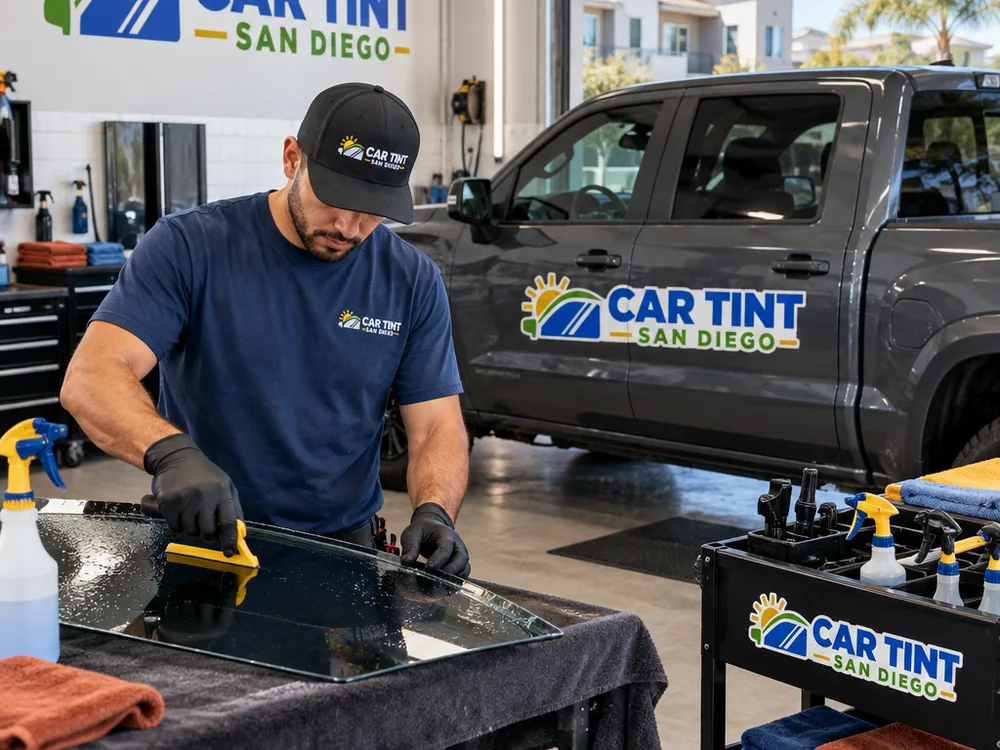
Choosing an Installer
A lot of people ask for xpel ppf san diego because XPEL is widely known and consistent. Film quality matters, but install quality matters just as much. The same film can look great or look sloppy based on who installs it and how the shop handles prep.
When you compare shops, ask practical questions that reveal how the work will look on your car:
San Diego's bright sun makes haze, stretch marks, and dust under film easier to spot, especially on darker paint. That is why we plan installs around lighting and finish checks, not just getting the film on the panel.
Common Questions
Most PPF installs take 1 to 3 days depending on coverage and how much prep the paint needs. A full-front package is often faster than a full vehicle wrap, and vehicles with complex curves or prior paintwork can add time because fitment and finish checks take longer.
Some edges will be slightly visible up close, but a careful install keeps them minimal and consistent. Where the panel design allows, edges can be wrapped and tucked for a more factory look; where it does not, we place edges so they are straight and less noticeable.
Yes, but the film will not hide most paint defects, and it can lock them in visually. If you want the cleanest finish, we inspect the paint first and recommend polishing where it will make a real difference before film goes on.
PPF is generally safe on factory paint when installed and removed correctly, but repainted panels need extra caution. If a panel has been repainted, we will talk through risks and timing because film adhesion and removal behavior can vary with non-factory paintwork.
Treat it like paint: gentle washing, clean towels, and avoiding harsh abrasion. For the first days, follow cure guidance and avoid pressure washing directly at edges; that early period is when corners and wrapped edges set.
Look for clean edge work, consistent seam placement, and a clear explanation of prep steps and aftercare. Ask to see close-up examples under bright lighting, since San Diego sun makes defects more obvious than shaded photos do.
Plan Your Protection
Tell us your vehicle, how you drive it around San Diego, and what areas you want protected. We will recommend the right coverage, explain edge and seam choices, and confirm the scope before installation.